Start with the current official numbers
If you want a serious answer to the local-versus-cloud question, you have to begin with current vendor pricing rather than anecdotes.
As of April 8, 2026, AWS's public EC2 price list for US East (N. Virginia) shows three useful reference points for Linux On-Demand shared-tenancy GPU instances: g6e.12xlarge at $10.49264/hour, p4d.24xlarge at $21.957642/hour, and p5.48xlarge at $55.04/hour. Those are the real On-Demand BoxUsage rows, not reservation placeholders or capacity-block zero-dollar lines.
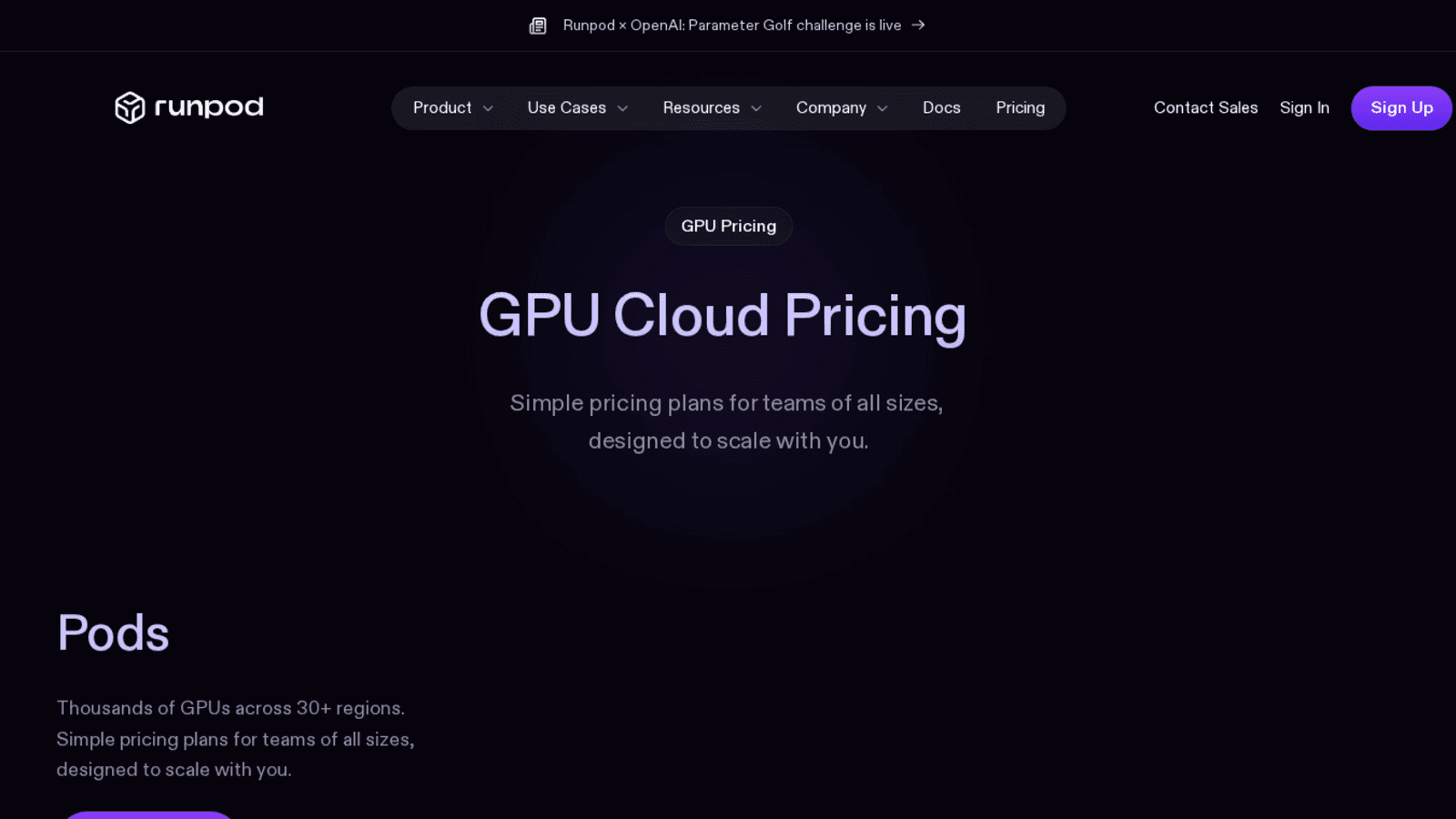
Outside the hyperscalers, the market gets cheaper fast. RunPod's public pricing page currently describes its GPU cloud catalogue with examples such as H100 80GB from $1.99/hour and RTX 4090 from $0.34/hour. Lambda's pricing page currently lists a NVIDIA H100 SXM at $4.29 per GPU/hour and an NVIDIA A6000 at $1.09 per GPU/hour. On the local side, NVIDIA's official GeForce RTX 5090 page confirms that the card ships with 32 GB of GDDR7 memory, which matters more for model-fit planning than hype does.
What those hourly numbers become over a month
If you leave rented capacity running all month, cloud costs stop feeling abstract. At 730 hours per month, the current AWS figures work out to roughly $7,659.63/month for a g6e.12xlarge, $16,029.08/month for a p4d.24xlarge, and $40,179.20/month for a p5.48xlarge. Lambda's current public rates work out to about $3,131.70/month for an H100 SXM and $795.70/month for an A6000 if left on continuously. RunPod's headline examples imply about $1,452.70/month for an H100 at $1.99/hour and $248.20/month for an RTX 4090 at $0.34/hour, again assuming you never turn them off.
Key insight: cloud rental is brilliant for intermittent access, but brutal for always-on waste. The second you keep an expensive GPU alive 24/7, the bill becomes an operational decision rather than a convenience fee.
Local hardware is different math
Owning hardware changes the cost model completely. You pay upfront, then mostly pay for electricity, cooling, and whatever your time is worth. The trade-off is that you are limited by the VRAM and physical topology you actually own. NVIDIA's official RTX 5090 page confirms the card has 32 GB of memory, which makes it materially more capable for local inference than a smaller consumer GPU, but still nowhere near the pooled memory of serious multi-GPU cloud systems.
That means local inference wins only when your workload fits your hardware and you can keep that hardware busy often enough to justify ownership. If your model fits comfortably in a 24 GB to 32 GB class card and you run it every day, local starts looking compelling. If your workload occasionally spikes into multi-H100 territory, buying for your peak is usually the wrong move.
When each option actually wins
Local hardware wins when you have steady demand, privacy requirements, or predictable internal workloads that fit inside the VRAM you own.
Cloud GPU rental wins when you need flexibility, occasional bursts, or temporary access to bigger hardware than you can justify buying.
Managed APIs still win when you care more about zero-infrastructure convenience and frontier capability than about hardware economics. They are not the focus of this article, but they remain the simplest path when you do not want to run inference infrastructure at all.
The bottom line
There is no honest universal answer here. The cheapest option depends on whether the model fits local VRAM, how many hours per month you genuinely need compute, and how much operational burden you are willing to own.
If you only need occasional horsepower, current public cloud pricing makes renting the sensible default. If you have a steady daily workload that fits on hardware you control, local inference can be dramatically cheaper over time because your marginal runtime cost collapses after the initial purchase. The mistake is not choosing cloud or local. The mistake is paying always-on cloud bills for a workload that should have been either scheduled or owned.
Cover imagery sourced from RunPod's official GPU cloud pricing page.