The perception problem is real, even before you count bugs
The strongest case against modern Windows is not that every release is broken. It is that the product contract has changed in a way many users actively dislike.
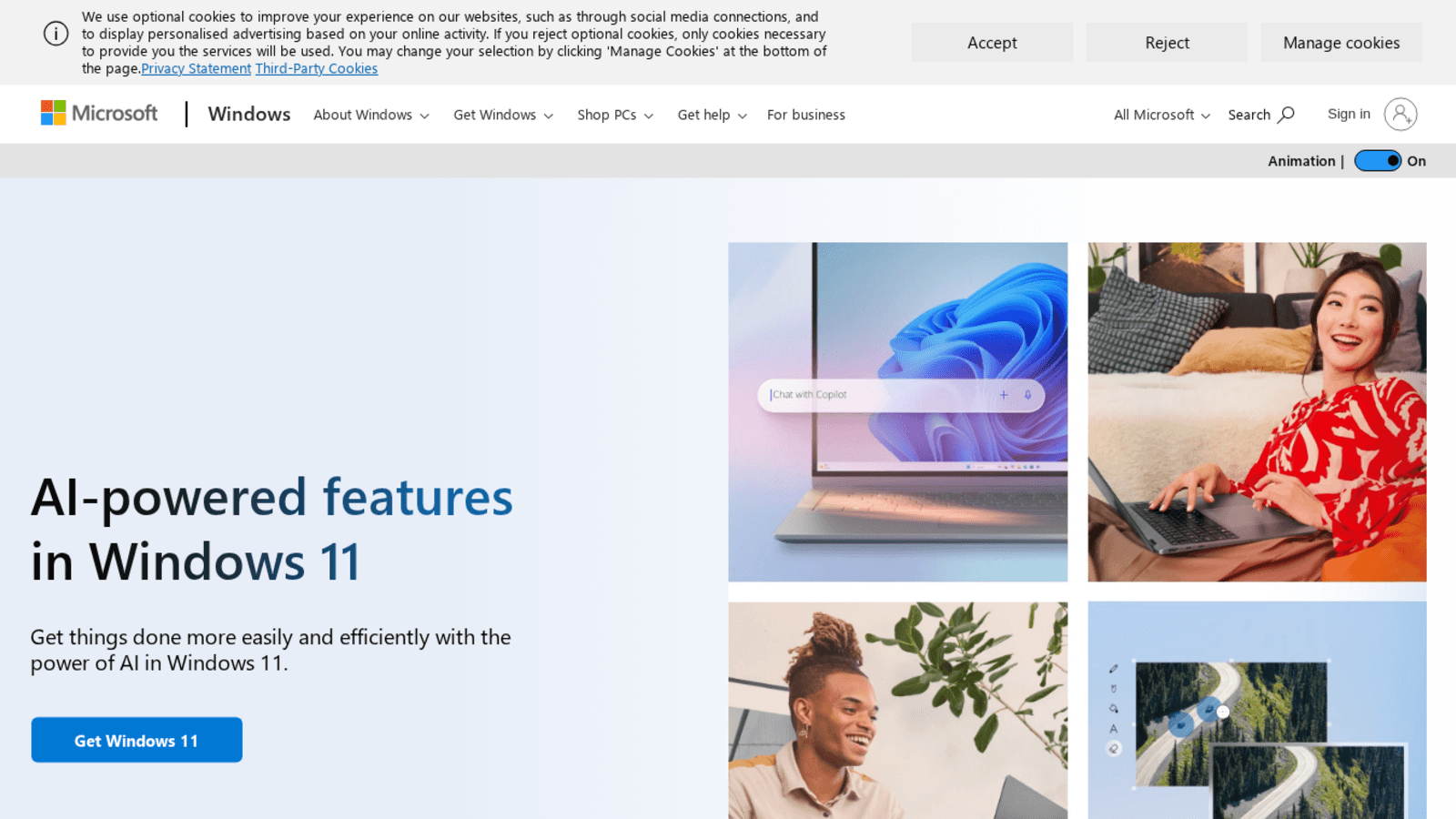
On April 8, 2026, Microsoft's own Windows pages present Windows 11 as an AI-forward platform. The official Windows AI features page is built around AI-powered tools, creativity, and productivity. At the same time, Microsoft's support documentation is explicit that Windows 10 support ended on October 14, 2025, with only a limited Extended Security Updates bridge for people who need more time. That combination matters: users are being pushed off a familiar platform and into a faster-moving one that Microsoft increasingly markets around AI.
Microsoft's release-health documentation reinforces that feeling. The current Windows 11 release information page is not a static monument to one long-settled operating system. It is an active release matrix built around current versions such as 24H2 (OS build 26100) and 23H2 (OS build 22631). That does not prove Windows quality is poor, but it does help explain why many people experience Windows as a service that is always changing underneath them.
Key insight: the modern Windows quality debate is as much about trust and product direction as it is about individual defects. Constant change, AI-first positioning, and end-of-support pressure shape the perception.
What Microsoft is optimizing for
From Microsoft's point of view, the strategy is coherent. Windows 11 is now the supported mainstream desktop platform. Copilot and other AI features are part of its differentiation story. New hardware categories such as Copilot+ PCs are part of the sales motion. None of that is irrational from a product or commercial perspective.
The problem is that many long-time Windows users wanted something else: a general-purpose operating system that stayed out of the way, ran existing software well, and did not turn every few months into another migration or feature-education cycle. When the official message becomes new AI features instead of reliable continuity, users who prize calm and predictability understandably start looking around.
Why macOS benefits from that shift
Apple's current Mac User Guide for macOS Tahoe highlights a very different promise. The page foregrounds continuity across Apple devices, built-in privacy and security controls, and new Tahoe features that fit into a hardware-and-software stack Apple controls end to end.
That does not make macOS objectively better for every person. It is still a more closed ecosystem, the hardware costs more, and upgrade paths are far less flexible than a generic PC. But the message is consistent: Apple is selling a tightly integrated experience, not a mandatory transition into a new AI identity. For users worn down by Windows churn, that consistency reads as quality.
Why Debian benefits too
Debian makes an even plainer promise. Its official Reasons to use Debian page still leads with free software, stability, and security. It also explicitly notes that Windows 10 support ended in October 2025 and points users toward the End of 10 campaign rather than toward a new hardware upsell.
Debian is obviously not a one-for-one replacement for every Windows workload. Some desktop applications, games, and proprietary tools still keep many people on Windows or macOS. But Debian's appeal is not mysterious: it offers a stable base, long-lived systems, and far less product noise. For technical users who can live inside a browser, terminal, and a sensible app stack, that restraint feels like quality.
The bottom line
The nickname Microslop survives because it captures a mood. Microsoft's own official material in 2026 shows a company steering Windows toward AI-heavy messaging, active release management, and post-Windows-10 migration pressure. That does not prove Windows is uniquely bad. It does explain why many users increasingly compare it unfavourably with Apple's coherence and Debian's stability-first philosophy.
The core issue is not simply bugs. It is whether users still trust Windows to be a dependable personal computer platform first, rather than an always-evolving vehicle for Microsoft's latest platform priorities. Right now, that trust gap is exactly why macOS and Debian keep benefiting.
Cover imagery sourced from Microsoft's official Windows 11 AI features page.