The Wait is Over
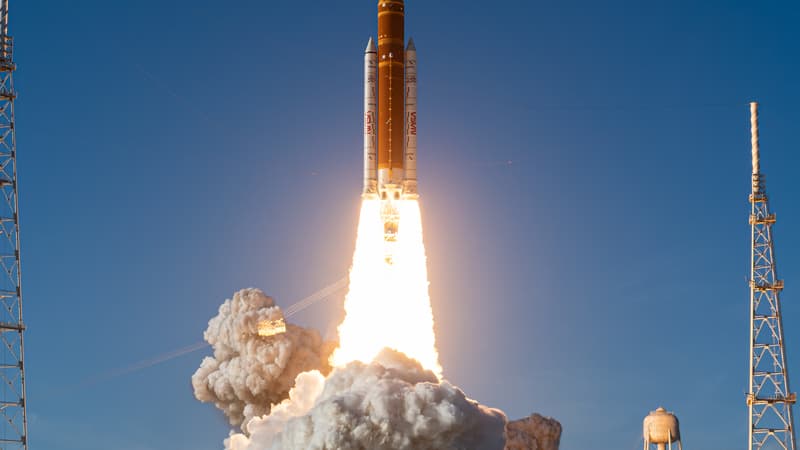
At 6:35 p.m. Eastern Time on 1 April 2026, NASA's Space Launch System (SLS) rocket ignited four engines and 3.6 million pounds of thrust, lifting the Orion spacecraft and its four-person crew from Launch Complex 39B at Kennedy Space Center. Artemis II was underway — the first human mission beyond low Earth orbit in more than half a century.
The ten-day flight will send the crew on a free-return trajectory around the Moon, skimming as close as 4,700 miles (7,600 km) beyond the lunar surface before swinging back home for a splashdown off the coast of San Diego on 10 April. They are up there right now.
The Crew
Four people. Four firsts. The Artemis II crew collectively carries more historic milestones than any mission since Apollo:
- Reid Wiseman — Commander. NASA astronaut and former ISS commander. Oldest person to travel beyond low Earth orbit.
- Victor Glover — Pilot. NASA astronaut. First person of colour to travel beyond low Earth orbit.
- Christina Koch — Mission Specialist. NASA astronaut. First woman to travel beyond low Earth orbit.
- Jeremy Hansen — Mission Specialist. Canadian Space Agency astronaut. First Canadian and first non-U.S. citizen to travel beyond low Earth orbit.
The spacecraft itself is called Orion Integrity — a name chosen by the crew to reflect the mission's test-flight purpose: proving out the spacecraft's systems before the even more demanding missions to come.
Key insight: On the first day of the mission, all four crew members set new records simultaneously — first woman, first Black astronaut, first Canadian, and the oldest human to travel beyond low Earth orbit. One launch. Four milestones.
The Rocket and Spacecraft
SLS is the most powerful rocket NASA has ever built. Standing 322 feet (98 m) tall, it produced more thrust at liftoff than the Saturn V that sent Apollo astronauts to the Moon. The core stage — built at Michoud Assembly Facility in New Orleans — arrived at Kennedy Space Center in July 2024 after years of integration and testing.
The Interim Cryogenic Propulsion Stage (ICPS) performed two critical burns in the hours after launch: first raising perigee to 185 km, then lifting apogee to more than 70,000 km to set up the translunar trajectory. Orion's four solar array wings — each with 15,000 solar cells and a 63-foot wingspan when deployed — are now generating continuous power for the journey.
Ahead of the translunar injection burn that commits the spacecraft to the Moon trajectory, flight controllers are running a comprehensive checkout of Orion's life support systems. If all checks pass, the main engine will fire to send the crew on a free-return trajectory — similar in concept to Apollo 13's path, but going significantly further from the Moon.
The Mission Plan
Artemis II is primarily a test flight. Its job is to prove that Orion's life support, communications, navigation, and propulsion systems work correctly with a crew aboard — before NASA commits to landing humans on the surface in the Artemis III mission.
The crew will manually maneuver Orion around the ICPS after separation in what NASA calls the proximity operations demonstration. This tests the spacecraft's handling qualities in a way that cannot be replicated in simulation.
The planned records the mission will set:
- Furthest human travel from Earth: 252,799 miles (406,841 km)
- Furthest human travel beyond the Moon: approximately 4,700 miles (7,600 km)
- Fastest human reentry speed: approximately 25,000 miles per hour (40,000 km/h)
The Path to This Moment
Artemis II was announced on 3 April 2023 — exactly three years before launch. That date was not accidental: NASA Administrator Bill Nelson revealed the crew during his "State of NASA" address, then handed the evening's NBA March Madness championship game in Houston an assist by having the crew appear at NRG Stadium in front of 70,000 people.
The road from announcement to launch was longer than anyone hoped. The mission was originally slated for late 2024, but slipped by more than a year due to two major issues: problems with Orion's life support system, and unexpected erosion on the heat shield discovered after the Artemis I uncrewed test flight in late 2022. A leak in the core stage oxygen valve hydraulics also required an engine swap in April 2025.
Rocket stacking finally began on 20 November 2024 — more than two months behind the original September target. From that point, the path to the launch pad took another sixteen months of careful preparation.
What Comes Next
Artemis II is the crucial precursor to Artemis III — which NASA now plans as a lunar landing mission, not the orbital test originally envisioned. Artemis IV would follow, delivering the first elements of a planned Lunar Gateway and expanding the human presence in lunar orbit.
Artemis III is currently projected to launch in mid-2027, aiming to land two astronauts near the lunar south pole — the first human footsteps on the Moon since Eugene Cernan climbed the ladder of Challenger in December 1972.
Bottom line: Artemis II is not the mission that puts boots back on the Moon. But it is the mission that proves every system works well enough to try. Four astronauts are right now circling the Moon in humanity's first crewed lunar flight in 53 years. That alone makes it historic.
Follow the Mission
NASA is providing live coverage of key milestones throughout the mission on the official Artemis blog, with continuous coverage on NASA's YouTube channel and NASA+.
Mission data sourced from NASA, Wikipedia (Artemis II), SpaceNews, and Reuters reporting on the launch. [Source] [Source]